
Five Top Mistakes to Avoid
 Written by Kay Taylor, managing director of JWAAD. Kay is one of the UK’s top teachers and has taught at most of the UK festivals as well as teaching internationally. Kay imports and sells costumes as Farida Dance – and runs specialist bellydance holidays as Farida Adventures.
We all make mistakes through our lives ….. move on from them ….. and hopefully learn from them. These are the top five mistakes I have observed dancers make. Some are or have been my students, others I have discussed this with at events and courses over the years. Having taught bellydance for over 30 years and made my living from it as a teacher, promoter and vendor, I have a wide network of bellydance friends around the UK and internationally. A huge knowledge base to draw from.
Mistakes can lead to stagnation, disillusionment, burn out or losing your mojo.
1/ Doing too much too soon
Over enthusiasm can lead to burn out. It is all about getting the right balance which will be different for each person. Through the pandemic some dancers signed up to hundreds of things on Zoom then found it was all too much and stopped dancing entirely.
Even before the pandemic I spotted two trends. First, the very enthusiastic new student who throws themselves at it, are upset when they can’t do it straight away and give up. Second the student who sticks with it and suddenly finds the wider dance world, starts travelling to lots of things, over commits themselves, gets exhausted and gives up because what they are doing is unsustainable.
Pick and choose what is right for you. What is right for your development at that particular time. If you are not sure, ask your teacher what they would suggest or if you don’t have a regular teacher find a mentor to help point you in the right direction.
2/ Stop going to classes
There are lots of reasons people might stop going to classes. A pandemic being one of them …. or maybe your life just got really busy …. or maybe you feel your regular class is no longer challenging enough. In the UK lockdown is lifting and classes are starting back up again. Times, venues and days may have changed so check your local ones out and commit to the one that best fits your schedule. When life gets busy and we start missing classes it is easy to get out of the habit of going. Decide what is important and prioritise your time. If the class is no longer challenging enough consider asking the teacher for private lessons to give you something to work on.
The problem with not going to regular classes is that we can develop bad habits and we loose our connection with the dance community and can lose your dance mojo. Classes are a place to immerse ourselves in bellydance music and moves, work on technique, develop improvisational skills and have fun with our belly buddies and get new inspiration. Regular classes are an important foundation to help feed our passion for bellydance…. it never hurts to go back to basics even if your class doesn’t challenge you any more.
If you are in an area where there is no local teacher, look at the Zoom options. These days you can join a class from anywhere. Or find a teacher/mentor you can go to monthly to keep you on track.
You can develop further by going to workshops and festivals or having private lessons. You can also develop your knowledge of the dance by doing courses like the JWAAD courses in music or culture. This informs your dance in a completely different way.
3/ Too much focus on technique
Technique is important but we can get too focused on it. If you only focus on improving your technique or adding new moves to your repertoire this can lead to disillusionment. Maybe we do not progress as quickly as we wanted to ….. there is that one move that you can’t quite crack no matter how hard you practice. Stop. Remember why you fell in love with the dance. Was it the music or the camaraderie? Was it the joy of moving your body in a new way?
Sometimes you have to move away from technique and just remember the joy of dancing for fun. Also 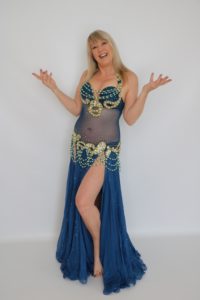 by moving away from it, you give your body chance to absorb it in a different way and then when you go back to it, you may find it suddenly clicks.
Our bodies are all different and can do different things. You do not have to have a wide repertoire if you do what you do well! Best to do a smaller amount effectively than too much that ends up being unrecognisable. Play to your strengths and find what moves your body has an affinity with.
No one ever watches a dancer and is inspired by their technique. The technique is a given, the musicality, emotional expression and personality are what inspires.
Having said all this, of course technique is important and the top dancers have excellent technique on top of all the other qualities needed to be a star!
4/ Staying in your comfort zone
We are all guilty of this at some point. There is nothing wrong with having a comfort zone and staying within it most of the time but you do need to push the boundaries if you want to develop otherwise you risk stagnating. It is easy to keep doing what you do. And if you are happy with that, stick with it. Many of my weekly students are happy doing what they do. I give them enough to push them slightly along with a core of familiar moves. I am constantly surprised when I suggest someone moves to the next level class how many people do not want to. Maybe because they have a core of friends within their current class – or because it feels too much out of their comfort zone. Maybe some take up the challenge eventually, other really are happy staying where they are – and others fall by the wayside. Not ready to move forwards but dissatisfied where you are? Take the challenge!!
If there isn’t a higher level class, go to workshops or festivals to top up your learning.
5/ Teaching too early
I have encouraged many dancers over the years to start their own classes. I love the idea of local classes so that everyone has access to a class wherever they are. Having taught the JWAAD safety course for a long time I have talked with both new and experienced teachers who have studied with us.
As a teacher it is easy to run out of inspiration or to keep giving until there is nothing left. You have to continue your own dance journey as well as teaching your class. You owe it to your students to be the best teacher you can be.
Some rush into teaching too soon and find the responsibility of teaching a regular class too much and give up both their classes and their dance. Others neglect their own development so their classes become very similar and eventually students get bored and leave.
If you have a full time job and possibly family commitments, it can be difficult to balance everything.
So, much as I would love classes to spring up everywhere, think about it. How much do you know and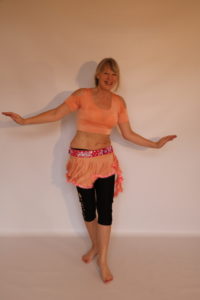 what commitment can you give to a class? Remember it is not just about teaching a fun pop choreography …. do you know the meaning of the song? What rhythms and styles are within it? What can you tell your students about it to help them understand. How developed is your technique and do you have a wide enough repertoire with which to teach?
All things to think about. Better to keep passionate about bellydance … and keep loving what you do than start teaching too early and loose your love of it.
Some of these may resonate with you. Each of us is different and we have to find our own path. Whatever you do, keep dancing!
Below are some options you can take up with JWAAD. These are suggestions – there are many other things out there in the wider dance world too.
Personal Development Programme
Private lessons with one of our JWAAD mentors who assess your technique and suggests ways to develop your dance. You can build a great relationship with your mentor who can help direct your learning to work towards what you want to achieve.
Our online music courses make up a whole musical journey. Sign up to the bellydance bundle ‘Bellydance Music Explored’ to immerse yourself in and learn about all aspects of music. You can dip in and out when you have time. There is a supporting facebook group and live lectures on Zoom.
In depth and fascinating. This is an investment. It covers everything from safety and lesson planning to background knowledge including music and culture as well as teaching skills. It takes a couple of years to complete and is split into modules.
5 tips for teaching effectively via Zoom
By international dancer, performer and movement expert Dorte Evelyn, founder of the Ishtar Dance 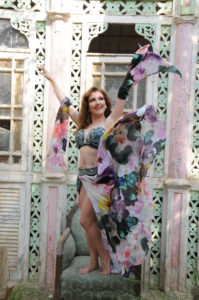 Academy.
For more than 3 years leading up to the Corona pandemic, I was teaching online using Zoom as well as other online platforms, so I guess I was prepared for the lockdown and everything that followed. But I still decided to make some changes to ensure my online classes were taught in an effective and professional way.
We now also teach this as part of our Bellydance Safely course which has an entire module dedicated to Zoom; how to use, how to troubleshoot, and not least how to use it in a way that still allows you as a teacher to check your students progress, and your students to enjoy and learn from the session too.
Why is this needed?
Teaching online requires different skills, and classes and workshops often need to be structured differently too. Many will have encountered and probably also [by now] resolved the sound issues that occur when you try to talk over the music. But there can still be problems with lag and not being in time with the music.
Why may you want to know all this as the world returns to ‘normal’? Because we have all moved on, and online classes are here to stay. They give students as well as teachers, the opportunity to teach beyond their locality. The convenience of not having to leave your house is – believe it or not – still a big selling point for some, and it gives the flexibility to be working and delivering classes even when you’re on the road. I will for example be teaching workshops from abroad this year via zoom and should I have to self-isolate or strand somewhere, then I will still be able to run these.
So what are the key basics to remember when using zoom…
1 Get your connection right
You can’t help students who may live in an area where there isn’t broadband, but you can ensure that you have the best possible connection your end to enable the best possible user experience.
Wi-fi can vary, so where possible I always recommend investing in an Ethernet cable [£5-£20] that you can plug into your computer for the most stable connection possible. If this isn’t possible, then make sure you are as close to your wi-fi as possible and that no one else if using is for high-intensity stuff such as gaming or streaming when you need it.
As with all electrical devices restarting your wi-fi hub is good practice too, which can help overcome a sluggish connection.
 2 Help your students get set up
Even after several years of zoom meetings you would think that the entire world has become zoom super users, but that is not necessarily the case. So make sure you help your students get the set up right at their end too.
You can either pull a guide together for them ahead of your session, or you can spend 10-15 minutes going through how it works with them before your class starts.
Here it is user end tips that matter; how to switch the views, what to do if the connection goes, what to do if there is a lag and image and sound get out of sync etc.
Do also spend a few minutes get your students set up in their dance space to ensure it’s safe, well-lit, that you can see them clearly etc.
3 Get the sound right
Make sure to do a sound test before your class, so your students can feedback and you can all proceed with confidence.
Whether you have a mixer set up, or are relying on the suppression of background noise on zoom – it’s always worth muting your participants and then do some counting over the music to see if everyone can hear you ok and that that there are no timing or other issues with the sound.
There are hundreds of YouTube tutorials on how to get the set up right, so you can find all this for free online. We also spend quite a bit of time on how to set this up and test it during our Safety Course, as it’s through the practical application of this that you learn and gain the confidence needed to assist your students too.
4 Get your set up right
This includes everything from background, lighting, and even to what you wear! A distracting background can make it really difficult to see and follow moves, and distracting shadows don’t help either. Again, there are plenty of free YouTube tutorials to get you started or to improve your existing setup.
Make sure to have portable lights at hand, especially if you teach during different times of the day. And keep your clothing bright or colorful so moves show more easily to your students.
Make sure you test your set up if possible before the class starts either by doing a recording or simply by asking the first student that enters your virtual classroom.
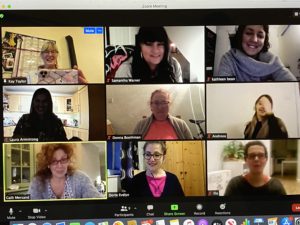
Zoom Safety course with Dorte & Galit
5 Adapting your teaching skills for online
So everything is set and you’re ready to start teaching – but have you structured your lesson to work for the online medium? Online teaching requires different skills than normal face-to-face teaching but everyone can learn it.
Communication is key, as is showing moves and combinations from different angles, because learning in 2-D is a lot harder than if you’re in the room.
Encourage your students to ask questions, and make sure that you take the time to monitor their progress and to feedback. If their setup isn’t great, then this may be tricky, which is why it’s important to take the time to get point 2 right.
Mirroring moves is obviously an essential skill for Zoom as well as the dance studio, but you also need to be mindful of how you structure your class, as people’s attention span often is lower when learning online. Keeping combinations simpler or building them up in a more structured way will help your students learn and not least enjoy the class more.
And finally, don’t forget to ask for feedback from your students too. Teaching via a screen can sometimes become/feel one-sided, so use the time on either side of your lesson to engage with your students and find out what worked and what needs improving.
We never finish learning, and this is very much the ethos of JWAAD too, and why I enjoy delivering courses such as the Bellydance Safely course – also online. To go direct to book your place on our next course starting on 13/14th November click here.
To find out more about Dorte visit the Ishtar Dance website: www.ishtardance.com
Amazing music workshops …..
We are delighted to announce a range of new lectures and workshops to run alongside our online course launched in 2020 ‘Bellydance Music Explored’.
‘Bellydance Music Explored’ replaces our previous ‘Understanding music used in bellydance’ course. It includes all the previous information and has been updated and refreshed with current and relevant clips, interviews and links.
‘Bellydance Music Explored’ is a bundle of six courses which you can work through in your own time. You have access for 12 months. There are 6 new lectures each year to accompany the course. These are free to subscribers and held via Zoom. They are recorded and added to the relevant courses so you can access them even if you didn’t join the live lecture.
Our next lecture is with Abeer Will who studied with a folklore troupe at university in Egypt. She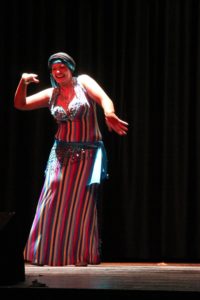 fell in love with all styles of bellydance. She met her husband to be whilst touring with the troupe in Germany and he persuaded her to marry him and move there where she still lives. Abeer was going to join us at Summer School last year but of course Covid put stop to that!
Sunday 27th June 2021
‘Recognising Baladi Music’ 2 – 3pm UK time
In this lecture, Abeer will look at the different types of music classified as baladi including Tet Baladi and Baladi Awady. She will explore what makes them baladi and help you recognise what baladi is. This is free to dancers who subscribe to ‘Bellydance Music Explored’. For those who do not subscribe, you can pay to join the live Zoom lecture but won’t have access after the event. Click on this link to book.
We also host workshops to run alongside ‘Bellydance Music Explored’. These are open to all  dancers though we do limit numbers and subscribers get priority booking. The content helps consolidate information in the course and we often recommend you have completed specific sections to get the most from them.
Sunday 13th June 2021 4 – 6pm UK time
Zoomtastic Tabla Solos with Yasmina of Cairo and Joelle Barker
An amazing opportunity to study tabla solos with Yasmina. She will share her Cairo experiences of working with live music and help you develop your own tabla solo with Joelle. Numbers are limited to ensure you all get the opportunity to develop your Zoomtastic Tabla Solo so book early here
Joelle is holding a class to play rhythms before the tabla solo class. As a dancer this really helps you access rhythms in a different way. Contact Joelle direct to take part – this is her FB page.
Sunday 27th June 2021 3.30 – 5.30 UK time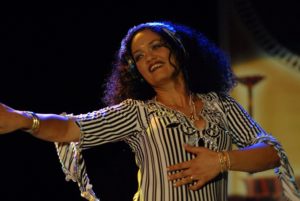
Build an improvised Baladi dance to Baladi Awady music with Abeer Will
This dance workshop builds on the earlier lecture. Abeer is a very generous teacher and shares music sources as well as information. Abeer will explain the structure of Baladi Awady, the feeling and what it is important that you catch within the music. This will enable you to bring a really authentic feel to your dance. Click here to book.
If you want to join our amazing musical journey and sign up for ‘Bellydance Music Explored’ click here.
For us at JWAAD the music is such an important part of bellydance. There are so many different genres of music, different rhythms and styles. Understanding them informs your dance in a completely different way. It gives you confidence and inspires you to add more range and depth to your dance.
Whatever dance journey you choose, we hope you enjoy it and keep developing your dance.
Musings of a Belly Dance Teacher
Belly Dance Musing
By Kay Taylor – a teachers perspective – written 2016 – but still relevant.
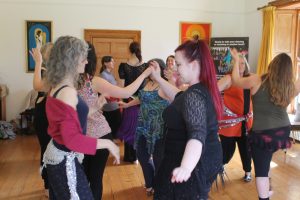
I have been made to stop and think by a few posts on Facebook recently. They were really thought provoking reads that made me think about whether, as teachers, we need to strike a better balance in classes.
The points that made me stop were: Emma Chapman saying she hadn’t danced for a year. Jude McGillivray musing about the stress of self improvement. Rita Williamson bemoaning the lack of opportunities for social boogying. I am paraphrasing and all 3 said much more than this … these are the points that stuck with me.
Do we as teachers put too many expectations on our students? Or is it because Belly Dance becomes such a passion that we put the stress on ourselves? Are we all so focused on performing that we forget the joy of social dancing? I don’t think there are any answers as such – we each have to find our own path.
The concept of stopping dancing for a year is incomprehensible to me …. But it could be really beneficial. Sometimes we need fallow time to allow everything to settle. Maybe a new challenge will come along, maybe a different style of dance … or maybe an enjoyment of what is inside rather than striving to be something else, or meet others expectations.
Is the journey to be a ‘better’ dancer – or a ‘better’ teacher too subjective? Is too much emphasis placed on technique? To be a better dancer, do you have to have completed this course or studied with that teacher? I don’t think so, I think that for each of us it is different. Also, at different points in our lives, different things are appropriate. As teachers, it is our job to recognize what might be right for people at different stages of their development. What I have found is that as individuals develop, the teaching role becomes more of a mentor role.
I have heard teachers describe themselves as a social teacher. It made me think about what kind of teacher I am and I believe that I am a ‘social’ teacher too. I have classes that are about community, confidence building and fun. But I also have classes where development is the focus. I don’t make apologies for either – students come to whichever is appropriate to them. Or go to a different teacher if they find their style more to their liking. I try not to take it personally! I do think Rita had a point about opportunities for social dancing. Some classes focus too much on choreography and performing it. Maybe some other classes focus too little on technique and are more about the social element. As teachers, we are also often the organizers of events and it is really important to build social time into both them and classes.
Surely our responsibility to our students is to point them in the direction of events that will provide a range of opportunities.
Following a Dream
Following a dream….. By Kay Taylor
I came across this article I wrote a few years ago …. and relived the nightmare / excitement of the whole thing.
Promoting tours and organising events is the same all over the world. A lot of hard work and very stressful. I have organised successful events in the UK for many years but when I discussed the idea of the Farha Tour with Yasmina, I had no idea what I was getting into. Sometimes ignorance is bliss. If I had had any idea of the enormity of the task, I am sure I would have thought twice about doing it. It is in my nature to charge ahead and do things then realise the consequences later!
The dance scene in the UK has exploded over the last seven or eight years. There are many folks teaching that have never been to, what I consider, the ‘source’ of belly dance. This means many watered down, ‘UK’ versions of things going on. Not necessarily wrong but different. I felt people should have access to some reference points & if they never travel to somewhere like Cairo, how will they know the difference between the professional standards set there and a student hafla in the UK?
In March 2005, I organised my first Farha Tour. This brought together the professional musicians of Fer’et el Negoum led by singer Safaa Farid, our Tannoura, Sayed Amar, folkloric dancer and one of the principal dancers in the Reda troupe, Mohamed Kazafy & oriental dancers Yasmina of Cairo, Dandesh & Aida Nour. What a line up! A huge success with rave reviews, it was unfortunately a financial disaster for me personally. It took me 6 months to recover and get over the nightmares then, undeterred, I started making plans for the next one.
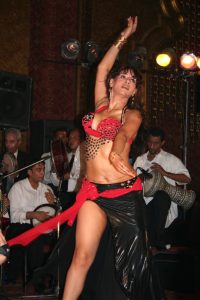 I wanted Randa Kamel as my Egyptian star. If you have never seen Randa, you should. She is fantastic – an incredible dancer with powerful technique and a dramatic presence. Yasmina was already on board & helped greatly with negotiations, following up things when I was in the UK & translating as required. Randa agreed to come and join the tour. I was happy – I could start the publicity. Having learnt so much from the first tour, I knew this one would be so much better organised. And, Insh’allah, make some money!
I applied for work permits – always an unknown quantity! I contacted theatres, booked hotels & chased up work permits. I paid deposits for theatres & sent more information requested by work permits. I paid for flights for 13 people – all still with no guarantee of getting work permits to bring them into the UK. Fortunately I do not have a nervous disposition – but even so, it caused a few nightmares. 3 weeks before the tour was due to start, having already paid out £10,000, you can imagine my relief when the work permits arrived. Everything would be fine …. I breathed a huge sigh of relief.
Members of the Farha Tour flew into Glasgow, Scotland on a dark, wet and windy day. Forewarned, they were all wrapped up. Randa had recently returned from Finland and was well equipped with winter boots, hat and coat. Unfortunately, not all of the instruments arrived – we were missing a tabla and the keyboard. The tabla arrived later the same evening and we were assured the keyboard would follow the next morning. It didn’t. We spent hours trying to track it down. Rehearsals went ahead without it and, two hours before the show was due to start, it arrived. Elation turned to devastation as Ashraf plugged it in and it didn’t work. He asked for screwdrivers. Once supplied, all the musicians helped, gathering round the keyboard, unscrewing the base and, all intent on getting it working, fiddled around with wires inside – until it worked. Elhamdulilah! We were in business.
The artistic content of the show, I leave to the artists. Yasmina generally runs some ideas past me but I trust their judgement in it. This means that the show is generally a surprise to me. We were all thrown in the deep end a bit – lack of keyboard, less time for rehearsals, the logistics of the venue. The dressing rooms were on a different floor so quick costume changes were difficult. Though we had our own sound technician, Richard, with us, I had decided to rely on the in house technician to do our lights. Unfortunately this is not how the venue understood it. I had to quickly learn the basics of lights. I knew how I wanted the show to look – and had instructed lighting technicians on the last tour – but had never actually been in charge of a lighting board before! I gave Clare, one of my students and tour manager of logistics a choice. Did she want to become lighting technician for the night and be able to see the show – or would she rather I did the lights and she was back stage helping with costume changes & in charge of the running order. She opted to do the lights – so I was backstage and saw nothing.
For a first night, it all ran smoothly after the initial problems. The audience loved it. The Glasgow girls who were hosting the show did a fab job and it was a sell out. We went on to a local Middle Eastern café after the show for something to eat. Scotland is no smoking anywhere in indoor public places. Not good for a bunch of Egyptians – most of whom were smokers. It meant the band spent a lot of time outside despite the bitter cold. Even the hotel rooms were no smoking – though I feel this was not taken too seriously. They really enjoyed the show – but were pleased the next gig was in England where smoking is still allowed! I had to warn them though, in 2007 England too is due to become ‘no smoking’.
In the morning I drove to Newcastle with Richard so we could get to the venue and set up the sound equipment in advance. It was just as well we went ahead. The bus couldn’t find the hotel so they were an hour late setting off. Then the hotel rang to say they had left behind an oud and some electronic equipment so the bus had to go back and set off again. Instead of arriving in Newcastle at 3pm to have a leisurely start, it was 5.30pm. They booked in their rooms then had to go directly to the venue for a sound check – then they were on.
 The show started. The band went on stage to do their opening number to a huge round of applause. Then into Yasminas first set. It was at this point that I realised we didn’t have a shisha for her second set. Yasmina intended to bring one from Cairo and forgot. The Glasgow girls had sourced one for the gig there – but it had been returned to it’s owner. F**k!!!! It was for a tableau set in an Ahwa (café). Yasmina was insistent she had to have one. I sent two folks off to a local restaurant to borrow one. Yasmina came off stage to get changed and I put the show in a holding pattern. Hebba, our baladi singer, did an extra song to fill time. As I suspected, Yasmina refused to start without it. A shisha is an integral part of an Egyptian Ahwa. Safaa sang again and then my guys were back with shisha. (Good news – the restaurant had said we could use it for the rest of the tour.) It meant the show ran over – but no one seemed to mind.
We also filmed the Newcastle show. Randa had insisted on a hairdresser at each venue. It was the one night that Randa didn’t like her hair! I was in fear of her refusing to be filmed. But she was completely professional and put on an excellent show which is now available on DVD! – Sold out now.
The next morning we set off to Southport. As we were loading the bus, the borrowed shisha got dropped and smashed! Back to square one. I rang ahead to Southport and arranged for Anne to locate one there. As ever, the journey took longer than planned so we went direct to the theatre. It is a gorgeous Victorian theatre – old and plush. A 450 seater and the show was sold out. Unbelievably, the changing rooms were down 2 floors – I felt for the dancers having to run up and down to change. While the band were checking the sound on stage, I was amazed to find Randa, Kazafy and Hebba laid out on the dressing room tables, apparently fast asleep. Randa told me that she learnt to sleep anywhere when she travelled with the Reda Troupe. Even more bizarre – she and Kazafy recognised Southport – they had been before when they both danced with the Reda Troupe – what a co-incidence. I had never been to Southport before – it was a first for me!
It was a fab show, getting tighter and more together all the time. Because of the distance from the dressing rooms, we had to stretch the numbers in-between costume changes a bit to give dancers the chance to get there and back. The audience were great. In Southport, our Tannoura, Sayed Amar, went down particularly well. They had never seen anything like his whirling dervish act before. Part of what makes the Farha tour so special is the mix of oriental, folklore & traditional dance. In the UK it is rare to see male dancers within the world of belly dance. To have Mohamed Kazafy with his strong saidi & playful semsamiya not to mention his fabulous duet with Yasmina was just a joy to watch. But also to have Sayed Amar, professional Tannoura, whirling dervish, was spectacular bringing a whole new dimension to the show.
We packed up after the show and headed to the aptly named ‘Nile Hotel’. It was run by a Moroccan couple who were delighted to host the artists from the show. They were completely full – with us and dancers who had travelled to see the show. So happy that they put an after show party on for us. We arrived, exhausted, to loud music blaring out to the point of distortion. The whole experience had a very ‘down town Cairo’ feel to it. Our hosts were ready to party all night. Kazafy and Randa turned out to be real party animals and, much to the delight of the other guests, boogied till the early hours. I don’t believe our hosts went to bed at all! They stayed up dancing and chatting till the last guests went to bed then cleared up, got ready for breakfast and waited until we had left before collapsing themselves.
The bus was definitely very quiet on the journey to London as everyone tried to catch up on their beauty sleep. 2 nights in the same theatre to look forward to – sheer luxury. From an organisers perspective, good and bad. Good that we didn’t have to travel. Bad because London is so expensive. By now, the show was running itself – we all knew what was happening and, if not quite seamless, there were no major problems. Or so I thought. It is always dangerous to become complacent! Richard did a good job with the sound with conflicting directions from the band. Tabla player Youssry was developing blisters from playing so hard as he couldn’t hear himself in the monitors. Accordion player, Reda, had nearly sprained his wrist for the same reason. Richard said that one of the band members had told him to change the mix in the monitors so he had. It caused a few harsh words but Safaa placated everyone and Richard changed the mix in the monitors – all was well again.
We had an in house lighting technician, Nadine, who I directed from back stage on the cans. Everything was running smoothly when Yasminas son, Azz, decided to have a tantrum back stage. She was due to go on for her last set. Up until now, we had had babysitters at each gig. For some reason we didn’t have one the first night in London. There was no one else to do anything. ‘Have to go – just do what you think looks good’, I told Nadine as I threw the earphones down. I grabbed Azz who was starting to scream, clinging onto his mother, ripped him away from her and took him out to the foyer. He was beyond reason and screaming so loud I was sure they would hear him in the auditorium. I took him outside and tried to talk soothingly to him. I decided many years ago that I didn’t want children. I am not particularly good with them and, so far as I was concerned, this was not part of the deal! I managed to hand him over to Clare and headed back stage in time for the interval. Yasmina was extremely apologetic. The rest of the show went without a hitch.
The next night we could arrive later as we didn’t have to set up. Unfortunately they had lost the keys for the dressing room backstage so it meant our dancers had to rush their make up but that really was the only hitch. Nadine felt confident with the lights so I left her to it. I wanted to take photographs. We had our ‘official photographer’ in Southport but I also wanted some of my own. As a dancer, I take good shots as I can anticipate what is going to happen. It was also the first opportunity I got to see the show all the way through. A lot of it through a camera lens admittedly but at least I saw it. And it really was good. Such variety. Such good musicians. And the dancers – each with his or her own unique essence which they bring to the stage. Yasmina, cool and fluid yet with an intimate smile that pulls you in. The humour and wit in her ‘Ahwa’ tableau and the glamour of her Samia Gamal & Farid el Atrash duet with Kazafy. Randa, so powerful, so sensual, a woman in her prime. I could not take my eyes off her. She, for me, epitomises everything I love about this solo form of Egyptian dance. I could watch her for hours. (And have whilst spending 3 weeks going through 4 camera angles to make the DVD!)
After the show we all piled back on the bus and headed to Poplar Docks in London where my dad is based. He was helping out by putting some of us up whilst others were in a local B&B. We ate with my dad, then I took those staying at the B&B there. Back on the boat I sat up chatting till 4am, others later. A sort of end of tour release. I just had to get the guys on the bus to the airport the following morning then I could relax. Despite a significant lack of sleep, everyone was up and ready to go on time. It was a wrench. We had eaten, slept & worked together solidly for a week. I had no idea what was going on in the world having been completely immersed in the tour and its issues. I felt torn as I said good-bye to each in turn. They had all worked so hard – with no words of complaint at the slightly chaotic way in which I do things. Even Richard (who tours with big name bands in his day job), though slightly bemused, felt it had all come together. He had read an article that Yasmina wrote about the 2005 tour saying:
“Kay is someone who throws all the balls up in the air from the start and trusts that they’ll come down in the right place,” was the description by one colleague of her working method. “The amazing thing is they almost always do.”
He felt he now understood what this meant.
Clare and I waved the bus off. As I saw it disappear in the distance, a weight lifted from my shoulders. It is a huge responsibility and as they drove off to the airport, it was like my old, pre tour life, was starting to seep back in. We headed for Kings Cross & caught the train back to Newcastle, sleeping most of the way.
It really does take at least 18 months to recover from the whole thing, plan and organise another – or not. Now I focus on taking groups to Cairo and showing them the nightlife and amazing bands and dancers in situ.
Organising big events takes up a huge amount of time and energy …. You have to want to do it for the love of it …. And just hope you make some money in the process.
Are you looking to...
What's happening
Posted on 02/12/2024 by Kay Taylor
Meet Jamilah Aziz
I am delighted that Jamilah is joining us to teach at Fantasia 2025. Since...
Posted on 02/12/2024 by Kay Taylor
Meet Ishtar: aka Dorte Evelyn
Meet Ishtar ak Dorte Evelyn by Kay Taylor I love to find out more...
Posted on 13/11/2024 by Kay Taylor
Meet Josephine Wise: founder of Fantasia and JWAAD
Meet Josephine Wise by Kay Taylor Josephine Wise entered my life in the 1980’s....
Posted on 13/11/2024 by Kay Taylor
Meet Levana: organiser of Etoiles d’Orient and amazing teacher / performer
Meet Levana by Carmen Tormo I met Levana for the first time around 2018....
Posted on 13/11/2024 by Kay Taylor
About Oxana Bazaeva
About Oxana Bazaeva Ossetians or Ossettes are an Iranian ethnic group of the Caucasus...
Posted on 13/02/2023 by Kay Taylor
Free Zoom for teaching
Dear Dancers We are about to start our next round of teacher training. Our...
Get in touch for more information