
What do you know about Baligh Hamdi?
- Did you know that Baligh Hamdi:
- Recorded 4 songs as a singer before he became a composer
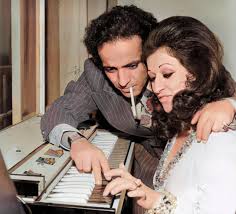
- That he mastered the oud and the violin as a child
- That he was a law student
- That he discovered Warda while she was teaching voice at the conservatoire
- That they were married
- That he composed songs for all the great artists including Oum kalthoum, Warda, Abed Halim Hafez, Nagat, Shadia, Sabah and Mohamed Rushdie
- That he moved to Paris after a scandal
- Would you like to find out more …. and why his compositions are the food and drink of dancers??
 The lecture will be followed by a dance class with Sara Farouk who will help us explore the musical magic of Baligh Hamdi – also on Zoom so you can join us wherever you are.
If you subscribe to our in depth and fascinating music course ‘Bellydance Music Explored’ you can attend the lecture for free.
Tips to Perform: Online and ‘Live’
 A little introduction… we are delighted that Mayel has contributed this blog. Mayel is a multi award winning belly dancer, a choreographer and a fully qualified JWAAD teacher and assessor….. and you can read more about her at the end of this article and on her website.
Tips to perform in real life versus online!
Now that restrictions are lifted it is finally time for us performers to get back to doing what we love in real life settings…
But to my surprise, I found out that getting back to live performance wasn’t as organic as I thought it would have been… I had to adapt my way of performing from dancing in restaurants, cabarets or theatres to online and then back from virtual to in person again.
My oh my I had forgotten how a different way of performing this is.
Here are some tips that I hope will help you make the most of your performances in this “new normal” world of ours:
Tip #1 SPACE
In a venue:
Check out your space as soon as you step a foot in the venue. You might have to adjust quickly your dance set to very oddly shaped rooms.
Make sure you use as much of the available space as possible. You might want to visualise shapes on the floor to use as foot patterns if the rooms allows it.
Example: Circles, Zigzags, figures of 8, Snail shapes, lines… This works particularly well if you are performing on a stage.
Then to change the visual dynamic of your performance, stay on the spot. You might have an audience all around you so use that timeframe to show different angles and come closer to the tables so everyone get to see all of you!
Floor work can create a dramatic level change and constitutes an interesting way of contrasting the mood if you are in a theatre or  cabaret stage. Though if you are in a restaurant, make sure the space is appropriate for it. Most of the audience might not even be able to see you if you are on the floor … That would just make you disappear and you never know what you might encounter on the floor… like broken glass or all sorts of things.
Online:
It can be challenging to dance at home as the dining table might be on the way but at least you are in control of your space and setting…
Well ahead of your performance, get your performance space set. See what’s ON or OFF your camera field. If possible, find a spot with plenty of good light where you feel comfortable.
I would advise not to travel too much around the room, nor focusing excessively on intricate foot patterns…Instead play with your camera creating some interesting effects. For eg. Create a zoom in and OUT option by coming close or far from your camera. It’s a great way to showcase the precision of your moves. You can also bring your hands close to the camera with your face just behind to highlight your hands and arms work and your facial expression. You can use this technique if you want a black out at the end of your performance, put the palm of your hand on your camera… And your viewers’ screen will look completely black.
It can also be very effective while you do something as intricate as a belly flutter or rolls to come very close to the camera showing only your belly… Get your audience have a close look at what you want.
Make your 2D performance a 3D experience for your virtual viewers.
Break the 2D lines by using twisty hip as well as upper body moves and angles.
Use level changes to make dramatic visual changes. Floor work can look amazing online if you are in the right field of the camera.
Tip #2 MUSIC
In a venue:
Your choice of music is essential and is the key to a good performance so try as much as possible to adapt your set to your audience.
Some will appreciate a full traditional set starting with a Magency ***, followed by some baladi***, then a folkloric*** section and a drum solo*** to finish.
The young crowd will relate more to the latest pop, shaabi*** or Mashwanat*** songs.
The non bellydancers, non familiar with Middle Eastern culture audience members will feel more confortable with Western fusions*** or bouncy upbeat pop Arabic.
***For more info about Music and styles in Middle Eastern dance check out the JWAAD music course
Online:
If you are playing the music out of an external device such as a phone or tablet, set up speakers and test their volume level to make sure you and your audience can hear it nicely. Also check your video call settings to make sure they’re optimized for music; on Zoom, you’ll want to enable original sound and disable automatic volume adjustment and background noise cancellation. A quick Google search can guide you through how to adjust these settings.
For online performance try to keep your set short but effective as it won’t have the same effect as in a venue and it’s very easy for an audience to get bored behind a screen.
Choice of music follows the same principles as in a venue. choose something that will resonate with your audience.
Tip #3 PROPS
In a venue:
Props like veils, fanveils or wings are traditionally used for the 1st song of a set. It’s a great way to grab the attention of your audience and help create a memorable entrance. They will complement your entrance turns, travelling and feet patterns.
Then usually after the entrance, you can bring your sword or candle tray to bring contrasts of mood and use of space. (From happy, clappy and travelling to something more dramatic, powerful and static)
Online:
The use of props can be a little more creative since you control what’s in the field of the camera or not.
Bring in props when it is not expected. If you have your veil or sword ready in front of you but not in sight of your camera, you can grab it at an opportune moment to create a dramatic effect… it makes it look like the prop appears by magic from nowhere.
Tip #4 AUDIENCE
In a venue:
There are 2 types of venues: Cabarets/restaurants and Theatres.
In cabaret settings or restaurants, your audience is here to be entertained so give them entertainment. Your performance should be fun and the proximity of the setting makes it very easy for you to engage with them. Make them the most important part of your show. Dance for them, around them and with them. When you perform in one of these settings you should never plan a strict choreographed set, it would never really work, instead make sure you know your music by heart and keep your set flexible. Your audience will sometimes love to join you, so show them a few organic moves to make them feel and look amazing if they are not familiar with the dance already. Some will prefer to watch. It’s also your job to feel when someone is not confortable with getting up on the floor, so respect their choice and dance for them instead.
Online:
Performing online, to me, somehow relates with performing in a theatre.
It’s easier to commit to a choreographed piece. You can allow more creativity.
It’s more about you sharing a journey, telling a story through movements rather than pure fun entertainment.
 Although in a theatre you have a feel of your audience, you can hear them react to your dance, you can’t see them… so you have to IMAGINE your audience. It’s the same for performing on zoom.
It can feel very awkward and isolating to dance for your laptop but try to visualise your perfect audience like your friends or supporters watching you. It really helps to dance for a friendly and supportive audience.
The exchange of energy and emotion between the audience and the performer is often what makes a performance special. That connection is not lost on Zoom. While performing, think of how you feel and how you can share those feelings with your audience through movements.
___________________________________
More about Mayel:
Mayel is a multi award winning belly dancer, a choreographer and a fully qualified JWAAD teacher and assessor. Her stage experience began at the age of 4 in France in a musical for children, where she performed for 10 years. At the same time, she also trained as a rhythmic gymnast. She has been professionally performing as a belly dancer since 2008 at weddings, stage productions, corporate and private events in UK, Europe and Australia and is currently a resident dancer in London. As a teacher she creates a fun and supportive atmosphere for her students. She teaches the musicality and history of the dance and educates her students in many different Middle Eastern dance styles. Mayel currently teaches an in person open level belly dance class on Tuesday nights at the Place in London Euston as well as online classes on Zoom. As a performer, she has been a soloist in Johara Dance Company directed by Jo Wise as well as one of the core members of Company of Dreams directed by Charlotte Desorgher. She has worked with International star Mr Ozgen featuring as a soloist in his exciting touring shows. Mayel is well-known for her unique style described as full of drama!
Effective marketing for bellydance teachers
Entrepreneur and business coach, Nikki Tapley takes us through ways to effectively market our classes and businesses. So much information, so many ideas …. this could really make a difference.
Part of a free day designed as a bellydance teachers networking event. Hosted by JWAAD and Kay Taylor. Sponsored by the JTA. (JWAAD Teachers association).
If you would like to join the JWAAD teaching community, develop your confidence as a teacher and give your students more confidence in you, the next ‘Bellydance Safely‘ course taking place on Zoom might be of interest.
Dance and mental health
It’s not just what it says on the tin – dance and mental health. A lecture by mental health practitioner Mandy Snee for bellydance teachers. Lots of useful ideas and concept to apply to your classes.
Part of a free day designed as a bellydance teachers networking event. Hosted by JWAAD and Kay Taylor. Sponsored by the JTA. (JWAAD Teachers association).
If you would like to join the JWAAD teaching community, develop your confidence as a teacher and give your students more confidence in you, the next ‘Bellydance Safely‘ course taking place on Zoom might be of interest.
Troubleshooting Technology
JWAAD hosted a free networking morning for bellydance teachers on Saturday 16th October. It was so useful we are adding each of the speakers and their subjects on separate blogs. Sign up for our emails if you want to be notified of the next one.
Here is Stuart Wilkinson from Sound Dynamics looking at: Troubleshooting Technology. His website is: www.sound-dynamics.co.uk These guys have worked with the fitness and leisure industries for years and are happy to go through what would work best for your individual situation. Whether it is Zoom set ups or live set ups. Hosted by Kay Taylor.
Part of a free day designed as a bellydance teachers networking event. Hosted by JWAAD and Kay Taylor. Sponsored by the JTA. (JWAAD Teachers association).
If you would like to join the JWAAD teaching community, develop your confidence as a teacher and give your students more confidence in you, the next ‘Bellydance Safely‘ course taking place on Zoom might be of interest.
The Administration Jungle
JWAAD hosted a free networking morning for bellydance teachers on Saturday 16th October. It was so useful we are adding each of the speakers and their subjects on separate blogs. Sign up for our emails if you want to be notified of the next one.
Here is Dorte Evelyn having a look at the intricacies of PPL, PRS and insurance options.
Part of a free day designed as a bellydance teachers networking event. Hosted by JWAAD and Kay Taylor. Sponsored by the JTA. (JWAAD Teachers association).
If you would like to join the JWAAD teaching community, develop your confidence as a teacher and give your students more confidence in you, the next ‘Bellydance Safely‘ course taking place on Zoom might be of interest. Dorte also teaches on this course.
Yasminas Top 5 Songs
By Yasmina of Cairo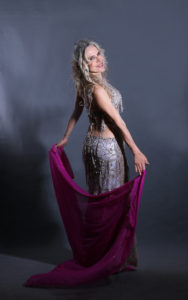
The first Arabic music that ever impacted on my consciousness was a lush, melodious song by Farid el Attrache, ‘El Rabeih’ (Spring), which I heard, not in Egypt, but Morocco, when I was on holiday there as a photography student in the 1980’s. Wandering through the market place of Marrakesh, or listening to the radio while traveling by car, Egyptian music and songs formed the soundtrack to that holiday. Why not Moroccan music? Because Egypt has been exporting music across the Arab world from the earliest days of recording, and all Arab-speaking countries, from North Africa to the Arabian Gulf and the Levant, have absorbed Egypt’s musical legacy. Before leaving Morocco, I stocked up on a whole bag of audio cassettes and took them back to London, where I played them non-stop while driving, at home, and in my photographic studio with bemused fashion models wondering why I wasn’t listening to Depeche Mode or the Human League instead.
Of course at the time I had no idea of the origin of the music. Farid el Attrache meant nothing to me, nor Oum Kulthoum, nor Abdel Halim Hafez. My education began when I started taking belly dance classes and began to learn movements to interpret the music I was already in love with. Early on I was also directed to the world of early Egyptian cinema, which I instantly adored. Already a Hollywood classic movie buff, it was a joy to me to discover a parallel film world with so many of the same elements, but accompanied by all these wonderful new sounds.
Listening to ‘El Rabeih’ now, I still get a flash of that original feeling, and in hindsight I can analyze what it was that drew me. Farid el Attrache was a prolific composer and wrote his 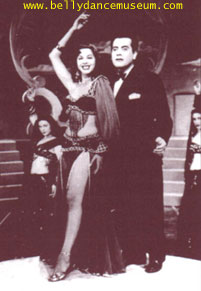 own songs, as well as those of other artists that performed in the films he starred in. The 1949 ‘Afrita Hanem’, which features ‘El Rabieh’ as a lavish set piece with Samia Gamal and a chorus of back-up dancers, was one of the most iconic musicals of the period. The closing theme is a waltz, something easily accessible to the Western ear. But also that lilting melody, the lushness of the violins – it all carried me away in a swooping wave towards the ‘otherness’ of this new world I was being seduced by.
Many dancers I know have spoken of their first musical crushes in their journey into Egyptian dance. I strongly believe that if you don’t truly love the music, you will never achieve your potential as a dancer. Because belly dance is also basically a solo dance (group numbers not withstanding), that fortunately means you can indulge in your own personal tastes on stage. You can make your own choices – even when dancing to live music – and let that passion for the song bring strength and emotion to your performance. Also, since Egyptian music covers such a wide range of styles, different aspects of your personality and technical abilities can be explored by using contrasting choices. Feeling soulful? A classic piece by Oum Kulthoum, or something quiet and moody by Sherine, will help you express it. Feeling earthy and a bit exhibitionist? A shaabi or maharaganat song could be just the thing. Or if you are wanting to go deep into a complex range of technique, show off with a spectacular mejancee!
Exploring and internalizing different styles of Egyptian music takes time, and trying to negotiate your way through lists of names without being able to put them in any context can be bewildering. Physically living within the culture of the music – in Egypt – obviously made this process easier for me, and in fact my education was organic, in that I learned about songs, singers and musical history, through performing to live music. I let my band suggest things to me. I’d listen to them rehearse, then go away and find the original source of that music, in a movie, or on a cassette, to gain some context. Often the movie clip would influence how I would perform it. I learned which songs were considered good choices for dancers to use on stage, and which were avoided. I remember getting my musicians to rehearse Oum Kulthoum’s ‘Leylet Hob’ (Night of Love) which they did without their normal enthusiasm, and then performing it, only to be told disparagingly by another dancer that ‘it’s just one of those songs that doesn’t work for the audience.’ Until this day I haven’t been able to figure out why; perhaps it is just down to trends.
It is worth noting that since the 1990’s when I first began performing in Cairo, those choices have really changed a lot. A song such as ‘Befaker fe el Nasini’ (I Remember Those that Forgot Me), by Mohamed Abdel Wahab, was considered a singer’s song, not a dancer’s. Yet ten or fifteen years later it was seized upon as a party piece by a new generation, and I myself recorded it on a dance album (‘El Warda’). Anything with a waltz in it (such as my first inspiration ‘El Rabieh’) was a non-starter – and to be honest even now, the waltz is not considered a dancer’s rhythm in Egypt. But nowadays these ‘rules’ or trends have largely been tossed aside, partly due to more and more dancers trawling through back catalogues of lesser-used songs for something different. Even I was quite surprised when Safaa Farid (who has sung on the albums of numerous dancers producing dance versions of classics) recorded ‘Rissela min Taht el Maya’ (Message from Under the Sea), for Karim Gad, an Egyptian dancer living in France. It’s an Abdel Halim Hafez classic never used by dancers until now.
In my opinion, use of some of these highly complex but not always obvious choices of songs by dancers today, reflects an increasingly sophisticated embracing of dance technique. To interpret a musically complex song with multiple rhythm structures and lyrical content, you need a lot of experience and great confidence in your ability! Across the globe, dancers from many disciplines who have fallen in love with Egyptian style, are bringing their own strengths to bear in this regard. Performing to sophisticated and challenging music is an exhilarating way to show off your talent.
Of course the advantage of re-recording classic songs with dance in mind is producing them accordingly – for example adding a tabla when there was once only a req, and making the tabla more prominent generally. Or shortening really long classics with different sections into manageable lengths with just the sections you want. BUT – and I say this as someone who has produced seven full CD’s, including many original commissioned tracks, for belly dancers – it is also really important that dancers wanting to know their way around Egyptian singers and composers, listen to the originals. As belly dance music producers, most of us have a limited budget, and producing the kind of full orchestral sound that was used to record most of the classics is way too expensive. This is not so important when you re-record a baladi track, but it makes a huge difference when you try to recreate a piece by Baligh Hamdi or Mohamed Abdel Wahab.
The ‘Singers and Composers for Belly Dance’ course on the JWAAD Teachable site is designed specifically for dancers to learn their way around a contextual understanding of the kind of original music used in belly dance. It covers a broad range of styles, and attempts to put them in structural framework chronologically, and laterally, so you can see the progression in classical, shaabi and folkloric over the last century.
As a bit of a teaser to give an insight into the course, I’ve chosen five of my all-time favourite tracks (in no particular order) that have had an impact on my personal belly dance journey. All of them feature singers and/or composers that are listed in our compilation. Of course when I was coming up with the list I realized there are bound to be other peoples’ personal favourites that slipped between the cracks. So the list is not definitive, but one thing is sure: any dancer acquainted with the majority of these artists named in the course, will be able to consider themselves knowledgeable about the range, history and influence of music from the Arab world on belly dancers.
YASMINA’S TOP FIVE
1) Es-el Rouhak (Ask Your Soul) Composed by Mohamed Abdel Wahab, sung by Oum Kulsoum
When I first came to Egypt, I believed myself somewhat acquainted with the most famous songs of Oum Kulthoum. I had performed versions of some of them (Leylet Hob as mentioned above, Inta Omri, Ana Fintizarek and others) on CD and with house bands in different countries for years. But this one, Eshel Ruhak, seemed new to me, and I was blown away by the sheer drama of it. Perhaps it arrived to my ears at a time that I was responding emotionally to the whole experience of where I was and who I was with, and the heart-stopping weeping of the violin solo gave me goose-bumps. To me this song carves a direct route to some of the most emotive aspects of Egyptian music. It is composed mostly in the hogaz maqam (or key), which is famous in Egypt as it is also the maqam of the Adan, or call to prayer. Rising from a low note, it conjures a feeling of building dread somehow. And when I learned the meaning of the lyrics I began the process of integrating the emotion of the music with something tangible in the emotion of the words.
Your betrayal of me affected me
And I changed bit by bit
I changed, and it wasn’t in my hands (i.e. I had no control over it)
And I began to bury my tenderness for you
And hate my weakness and patience for you
And I chose to go far (from you), and became stubborn
I was even able to desert you
And you, oh my darling
If you were in my place,
What would you have done differently?
Ask your soul
2) Ahwaak (I Adore You) Composed by Mohamed Abdel Wahab, sung by Abdel Halim Hafez
This is the ultimate dreamy love song that begins in classic movie mode at a grand piano, 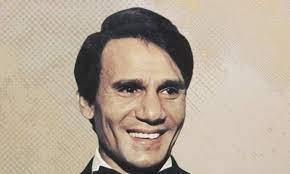 wafts you away on a melting cushion of oriental rumba, before lifting sharply into a dramatic rhythm shift and a soar of violins. A classic composition of Mohamed Abdel Wahab (you can learn more about his important contribution to Egyptian music in the course), it switches from the western to the Arabic scale halfway through, and is a great example of Abdel Wahab’s embracing of western orchestral music. The second half of the song builds slowly, gaining tension until it gives again, returning to the western scale and easing back into a soft ending. This is a wonderful song to just listen to, though when the oriental rhythms begin I defy you to stay still in your seat!
I loved this song so much I not only re-recorded it, but also featured it in a stage show (Spirit of Egypt) in both the UK and South Africa (2013), with a group of ballroom dancers paring up to interpret the rumba.
3) Kitab Hayati (The Book of My Life) Composed by Yousef Taaha, Sung by Hassan Asmar
Picture the scene: four am in a Cairo cabaret, the air dense with shisha smoke and customers waving their whisky glasses in time to the slow beat of the mazhab – some of them moved to step onto the stage and sway, others letting themselves fall into the sentiment of the lyrics, a charged mix of tragedy and excitement.
‘The book of my life, I’ve never seen a book like it. There are two lines of joy, and the rest is suffering!’ To deliver this brilliant shaabi lyric requires a classic shaabi voice: rough, powerful and with a break and a catch in it that heaps on the pathos.
This song for me captures the feel of live shaabi at its best, and Hassan Asmar, like Ahmed Adaweya, was a king of shaabi, but rightly or wrongly it was my impression that while Adaweya was a showman, Hassan Asmar had more gravitas. In contemporary Cairo, Ahmed Sheba, singer of the recent hit ‘Law La-ebt el Zahr’ (What if the Dice were Rolled ) is a natural descendent of this style of shaabi, and it is interesting to compare the two. ‘Kitab Hayati’ has been covered by many shaabi singers, but also by Lebanese star Georges Wasoof, whose gravelly voice (roughened, some say, by cocaine) was a perfect match.
Structurally I love the way the song begins with a killer vocal mawal, moves into a deep masmoodi, and then suddenly, just when you are immersed in that mesmeric rhythm, stops and kicks into a really fast maksoum, upping not just the tempo but the whole feel of the song, like a car that shifts gear and shoots down a race track. This is shaabi at its best for me; dark, melodically bluesy but exciting at the same time.
4) Maoula Di (Is this Possible?) sung by Shafika.
A new documentary that came out in early 2021 looks at the legacy of Shafika, referred to as the Oum Kulthoum of the Delta. Yet she is relatively unknown by the belly dance community, and even by many younger Egyptians. Very much a star in the rural shaabi communities of towns like Tanta and Mounira, she dominated the world of provincial baladi weddings until her death in 2011. When I first heard the song Maoula Di I was amazed at its rich musical arrangement – nothing like the kind of shaabi I’d been aware of until then. And that was when I began to understand that shaabi music could be complex, layered and sophisticated. I decided to record Ma-oula Di on my last CD, which was aptly named ‘Hayati’ (My Life) because I put on it many of the songs I’d most loved during my time on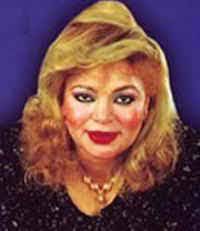 stage in Egypt. But actually it was a song I wish I’d used in my shows but never did. The original has such rich instrumentation that many workshop students have not identified it as shaabi at all. But you really only need to hear one note of Shafika’s voice (one that was hard to replicate with another singer) to identify its pure shaabi roots.
I also love the unequivocal lyrics which express disbelief at the fact that a lover has betrayed you and gone off with someone else. Its sense of outrage and hurt is so well expressed.
5) Fi Yum w’Leyla (In a Day and One Night) Composed by Beligh Hamdi, sung by Warda
Although some might cite Batwan Nasbeek as their favourite Warda track to dance to, Fi Yum w’Leyla is my choice. I listened to it quite indifferently for a long time when played by various bands, perhaps because it was over-used. And then, late in the day, I decided to play the whole of the original, the second and third parts of which are often missed out by dancers on stage. I was in love, and have recently used it – insisting on including those parts, which some musicians need to reacquaint themselves with. One thing I love about the old Warda classics is the seventies orchestration with its now vintage guitar sound. While during the eighties and nineties it seemed dated, to me it’s moved to the ‘classic’ stage. I think it would be quite difficult to recreate that sound now – certainly with a pared down oriental orchestra. But I particularly like the way you can shimmy to the electric guitar!
6) Tamally Ma-aak (I Am Always With You) Released 2000, Composed by Sherif Teg, Sung by Amr Diab
I am adding this as a postscript to my favourites list, even though is really isn’t a belly dance track. One of the biggest hits of the Arab world from arguably still its biggest pop star, it stands the test of time as a pop classic. It has a gorgeous melody and irresistible Spanish guitar – at the time a relatively new feature in Egyptian pop introduced by music composer and producer, Hamid el Shaeri (someone you can learn more about in the Course).This song was actually produced though by another star-making name in Egypt, Tarek Madkour. And of course it features the honeyed tones of Amr Diab, whose name and standing still towers above many newer successful singers in Egypt. Tamally Ma-aak uses a western scale, which makes it accessible to international audiences. A borderless crowd-pleaser, it’s a track for relaxing and unwinding – also great to play while driving in a warm climate with the wind in your hair!
You can subscribe to this course individually – or to our bellydance bundle ‘Bellydance Music Explored’. An in depth and fascinating musical journey.
Yasmina is not only one of our directors but has worked professionally as a dancer in Cairo for many years and understands the context of the dance and music. She teaches workshops on the international circuit and has a dancers BnB in Cairo. Yasmina brings a depth of knowledge to all her work.
Isolation is an Illusion
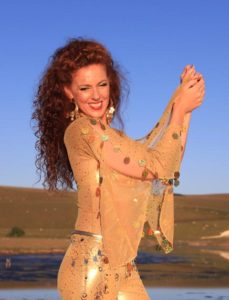

Anatomy discussed
One of my favourite parts of teaching the Anatomy in the JWAAD safety course is when we start looking at analysis of movement. This is the exploration of which muscle (and joints) are involved in executing different moves and how to teach that. One of the reasons I love it so much is that I too learn things from the sharing part which make me a better dance teacher.
Another aspect of the ‘active’ and ‘passive’ movements, specifically in isolation techniques is the body’s natural way to counter balance. This prevents us from falling when we move a certain body part out of the centre line. To someone
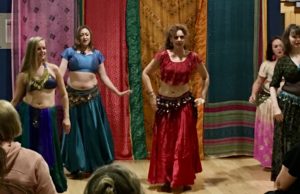
Galit and her girls
watching, the move (say a hip circle) will appear isolated. But the person performing it will notice that the upper body is also moving to maintain balance and poise. The counter balance of the body happens with every move that we make, including walking. I personally find it fascinating.
____________________________________
We are inviting applications for an ‘Yvette Cowles Scholarship’ – the last date for submitting them is 30th September. This award is specifically for people who want to do our ‘Bellydance Safely’ course. You can get up to 50% towards the course costs.
G to this link: ‘Yvette Cowles Scholarship’
Are you looking to...
What's happening
Posted on 02/12/2024 by Kay Taylor
Meet Jamilah Aziz
I am delighted that Jamilah is joining us to teach at Fantasia 2025. Since...
Posted on 02/12/2024 by Kay Taylor
Meet Ishtar: aka Dorte Evelyn
Meet Ishtar ak Dorte Evelyn by Kay Taylor I love to find out more...
Posted on 13/11/2024 by Kay Taylor
Meet Josephine Wise: founder of Fantasia and JWAAD
Meet Josephine Wise by Kay Taylor Josephine Wise entered my life in the 1980’s....
Posted on 13/11/2024 by Kay Taylor
Meet Levana: organiser of Etoiles d’Orient and amazing teacher / performer
Meet Levana by Carmen Tormo I met Levana for the first time around 2018....
Posted on 13/11/2024 by Kay Taylor
About Oxana Bazaeva
About Oxana Bazaeva Ossetians or Ossettes are an Iranian ethnic group of the Caucasus...
Posted on 13/02/2023 by Kay Taylor
Free Zoom for teaching
Dear Dancers We are about to start our next round of teacher training. Our...
Get in touch for more information